
On Fred Dibnah
Some recent media what I consumed

I don’t really watch telly these days. Nothing against the people who do, but it’s been pretty clear for a while that the ‘golden age of TV’ is well and truly over. ‘Prestige drama’ has given over to an endless wave of slop with the occasional amount of critical and thematic frisson to generate a series of thinkpieces both on here and in legacy media publications.
The issue, to my mind, is one of both excessive and insufficient serialisation. For an instance of the both occurring, you have patient zero of the slop era - Stranger Things. The latest episode of that show runs for 2 hours and 30 minutes, indicating a serious ignorance of form and incompetence of editing.1 On the other hand, that whole season of television is just 9 episodes long, which makes me think the yanks had a point with their 25 episode seasons at 45 minutes a piece. The pacing is a catastrophe.
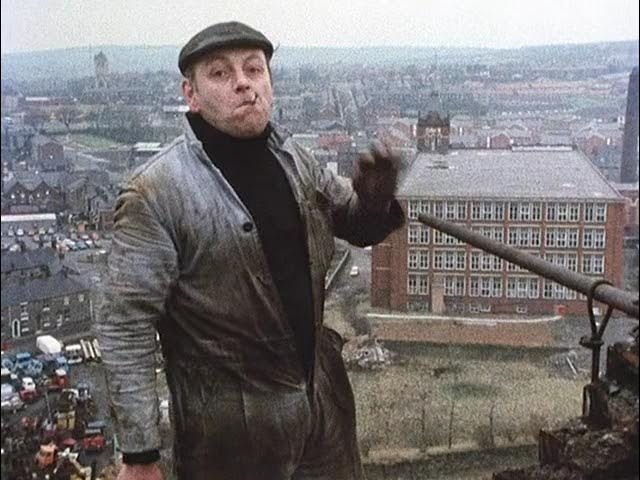
What did catch my eye, one idle Sunday in early October, was the BBC Archives documentary Fred Dibnah, Steeplejack (1979).2 Expanded from a BBC Look North West report the year before, which found reporter Alistair Macdonald interviewing Dibnah as he sat in his bosun’s chair on the edifice of Bolton Town Hall, the documentary follows the middle-aged Boltonian steeplejack as he undertakes his daily work.
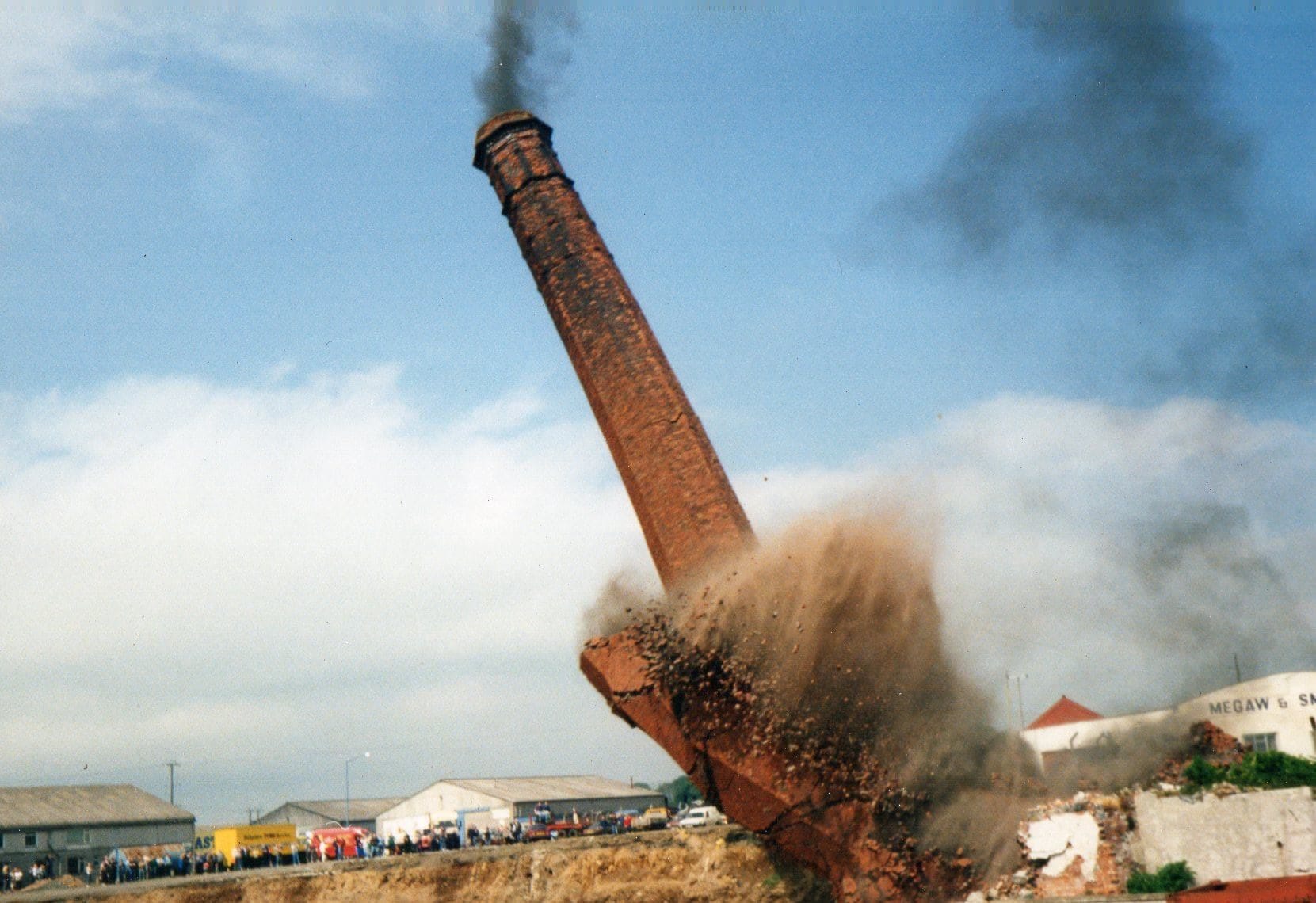
This work just so happens to involve scaling the enormous spires that once dominated the landscape of post-industrial Lancashire, occasionally conducting repairs but, more often, knocking them down brick-by-brick.
When the word ‘steeplejack’ is mentioned, what may spring to mind is a countryside idyll - masons and their apprentices restoring the spires of Anglican churches in cosy Home Counties villages. It may be startling, then, to catch Dibnah drilling away at the bottom of a smokestack on a desolate building site, under the grey skies of the Winter of Discontent. There’s no glamour here, no glimpse of sunlit uplands, only the moderate thrill of a day job that might kill you in a spectacular way. Dibnah is often remarkably candid about how men are driven to drink in order to perform such dangerous work (‘five pints at dinnertime’) and the misery of small town life viewed from the heights of defunct industry.
You don’t need me to tell you how utterly wretched any kind of discourse about class is in the UK, at a time when politicians are falling over one another to court the likes of Thomas Skinner (the privately-educated child of an investment manager who has gained working class credo on account of sounding thick). While a cynic like me might suggest there may be some element of poverty safari to the BBC commissioning a show like this (look at this quirky Northern character, can you believe he likes doing this?), when was the last time you saw something this honest?
There isn’t an enormous body of critical work on Dibnah, which is probably unsurprising given that his show is intended as light entertainment. However, one notable mention of Dibnah appears in the work of architecture critic Owen Hatherley, from Militant Modernism (2009): ‘Rather than the jetset smuggery of [Alain] de Botton, the ideal televisual analogue the British Modernist aesthetic is probably Fred Dibnah’s industrial archaeology, and his delighted wonder at the future’s ruins’.
This, to me, is where the real significance of Dibnah’s work lies. The towers that loom so large in his life, and the ones he is employed to disassemble brick-by-brick, will not be replaced by further industry. Instead, they are liable to become retail parks, office buildings, new-build housing estates. I’d hesitate in describing Dibnah as a modernist (or a willing one at least), given his fascination with the Victorian society that created the conditions of his native Bolton, as well as his agreement with King Charles on issues of modern architecture. He was a man strangely out of time, swinging in his bosun’s chair between a past that he venerated and a future where people like him would be made to seem like curiosities.
Due to my monastic abstention from weighing in on current ‘media discourse’ on here, this is as close as I’m likely to come to discussing this show ahead of the final season airing. I will say that I think it’s net effect on the culture has been bad though, from lame millennial nostalgia to the advent of ‘binge-watching’ culture.
Bizarre luke, was just going on a Dibnah binge when this popped into my inbox